
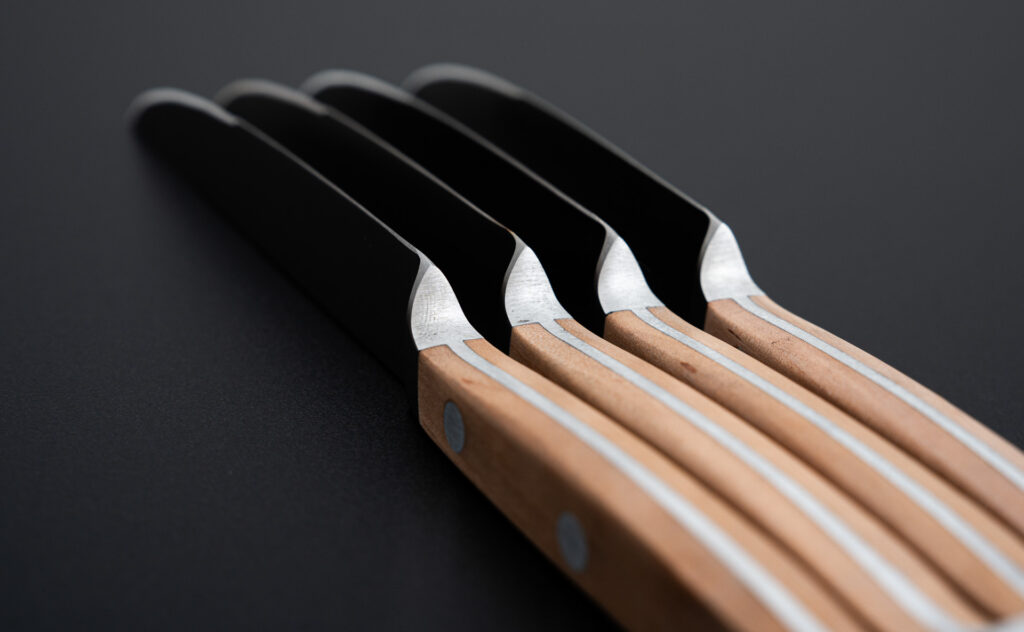
Einzigartige Struktur und Charakter
Mikarta SERIE
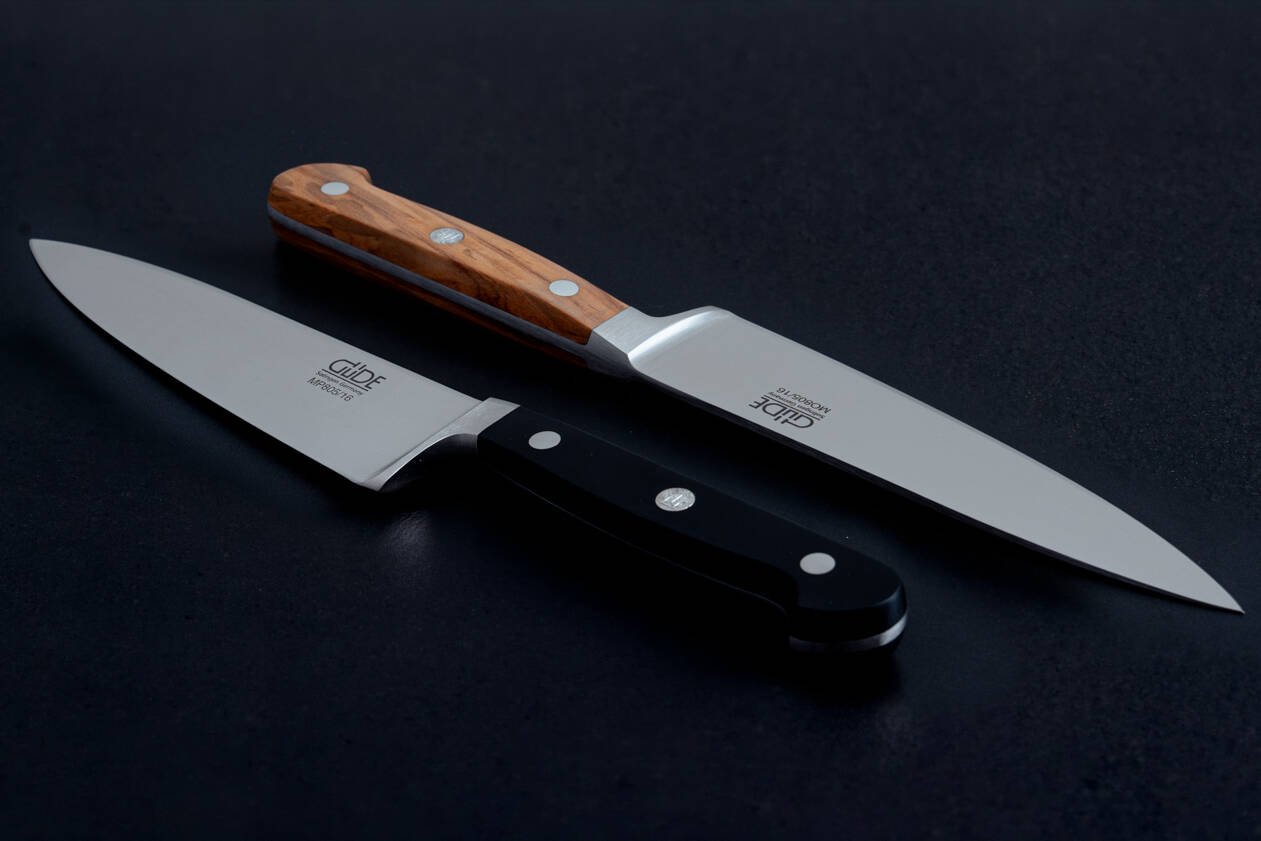
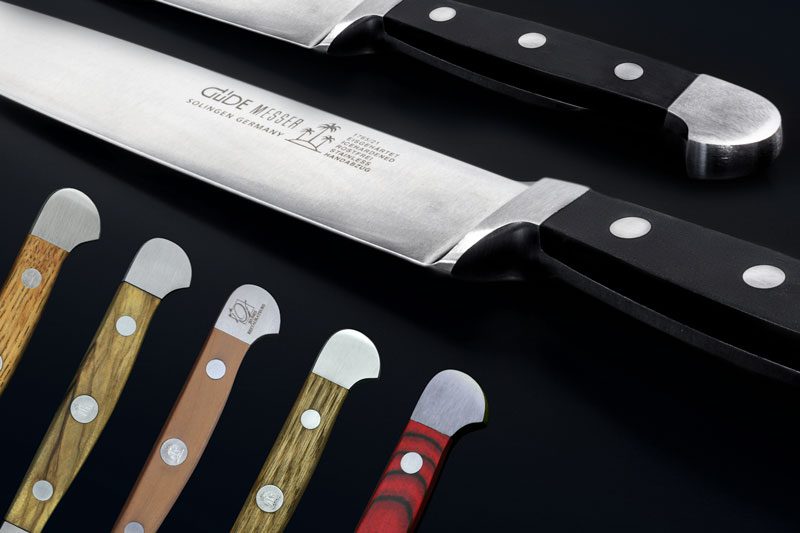
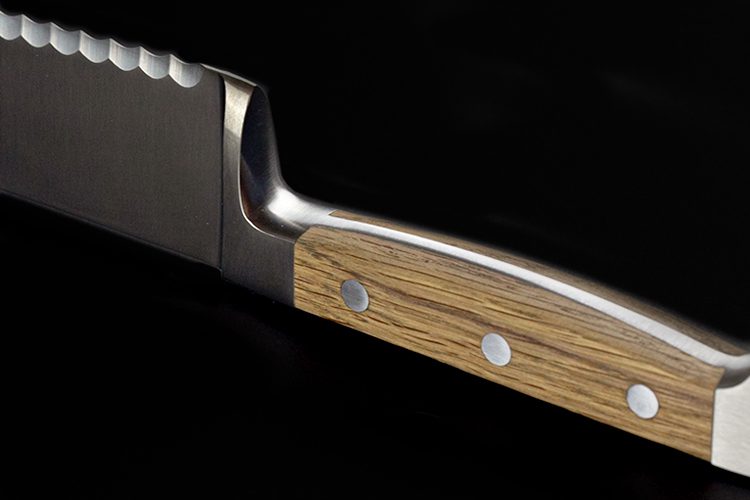
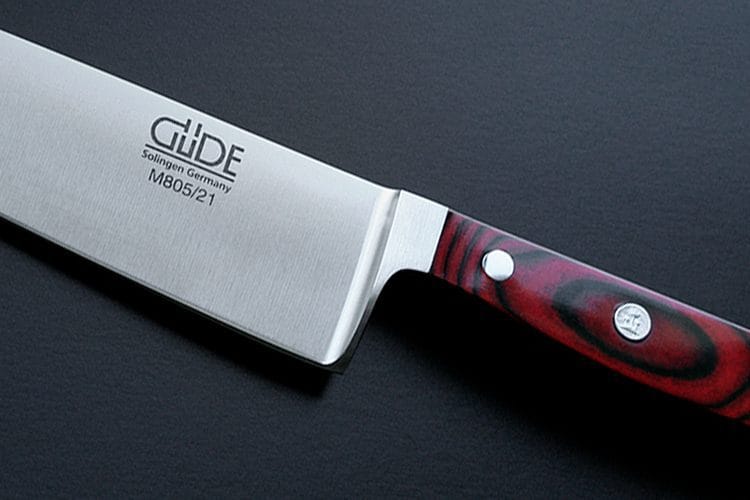
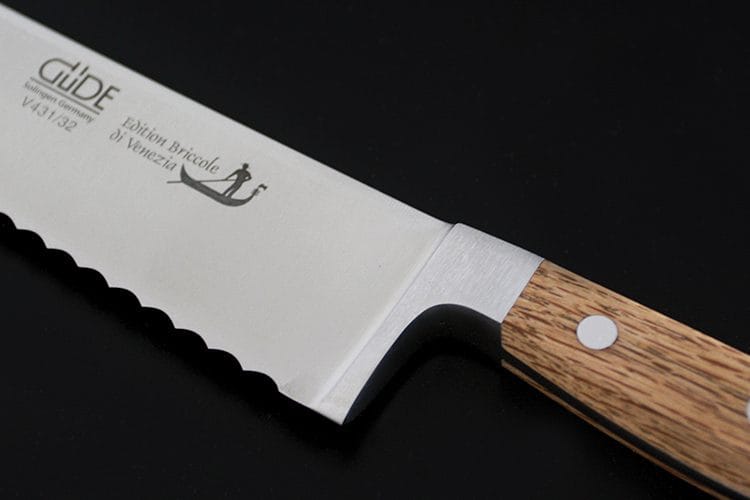
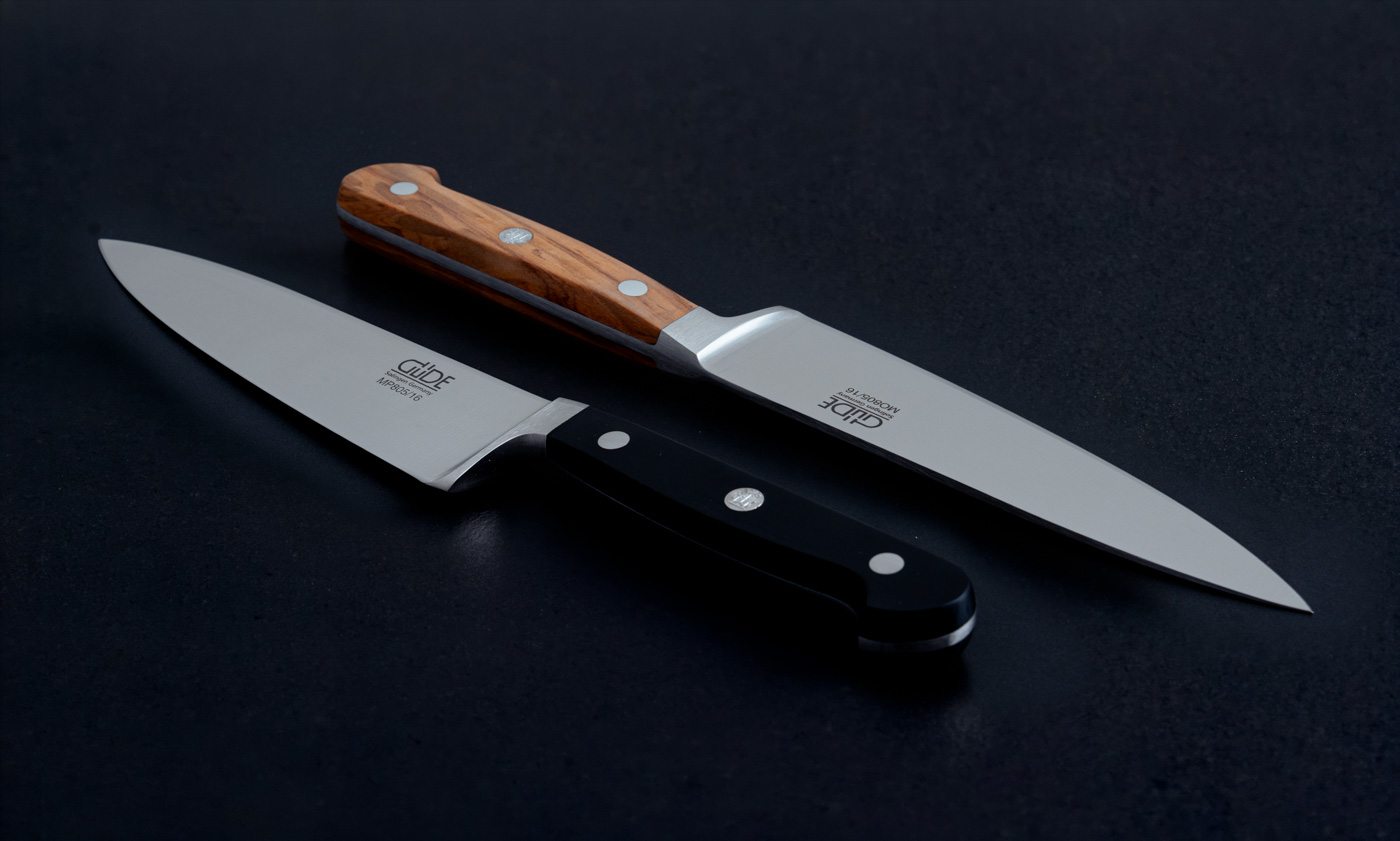
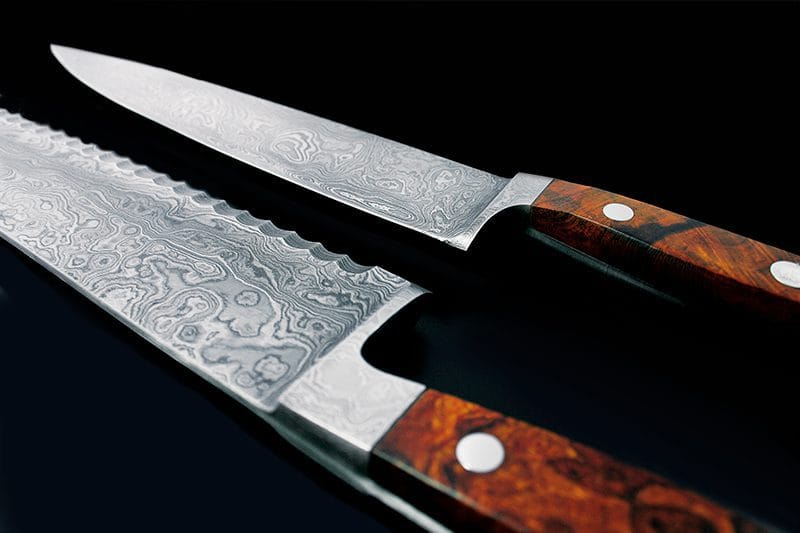
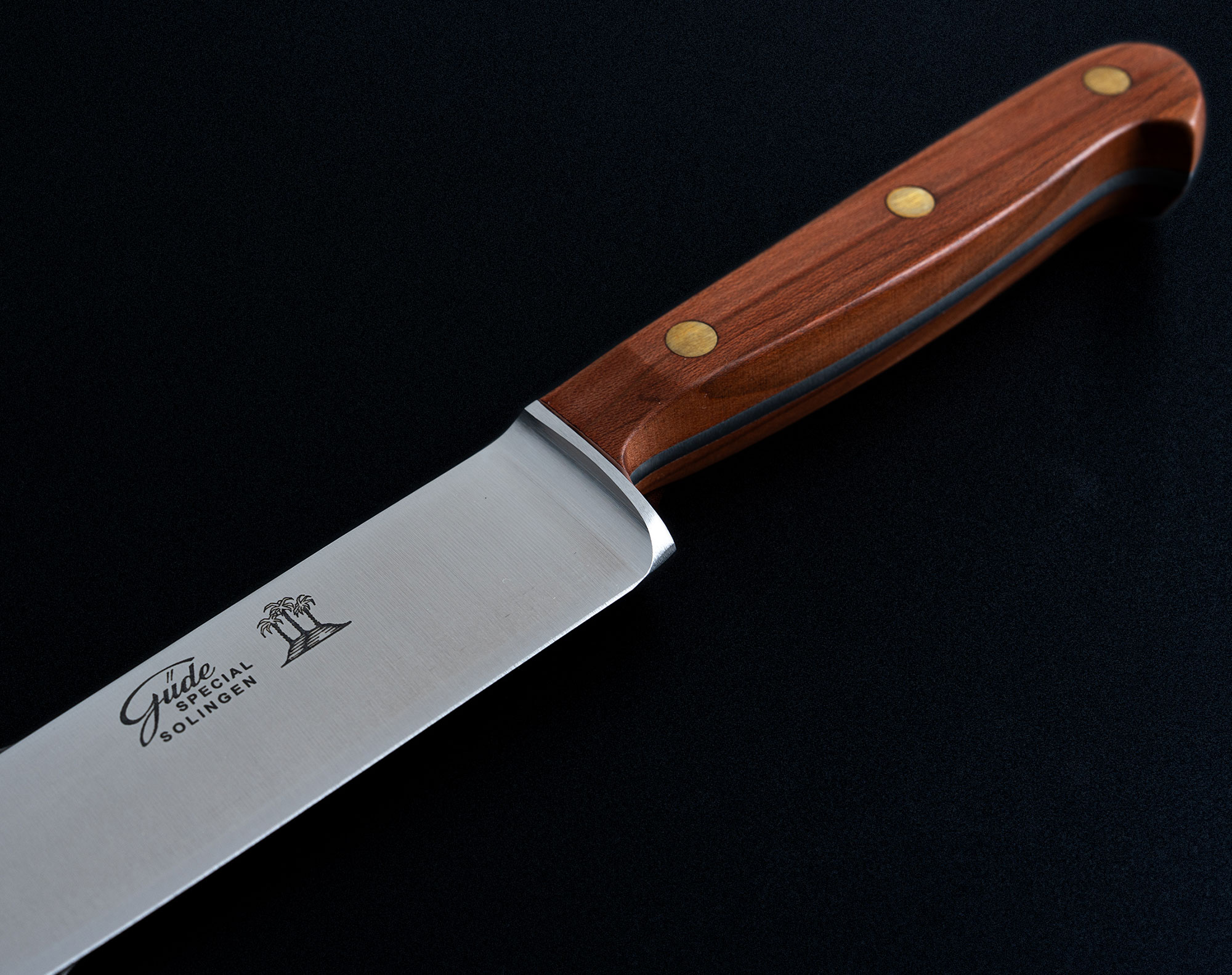
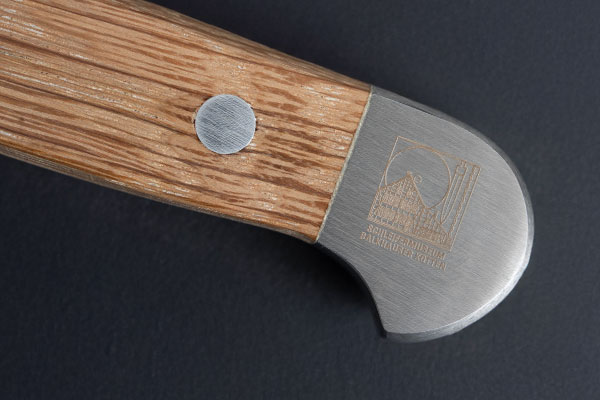
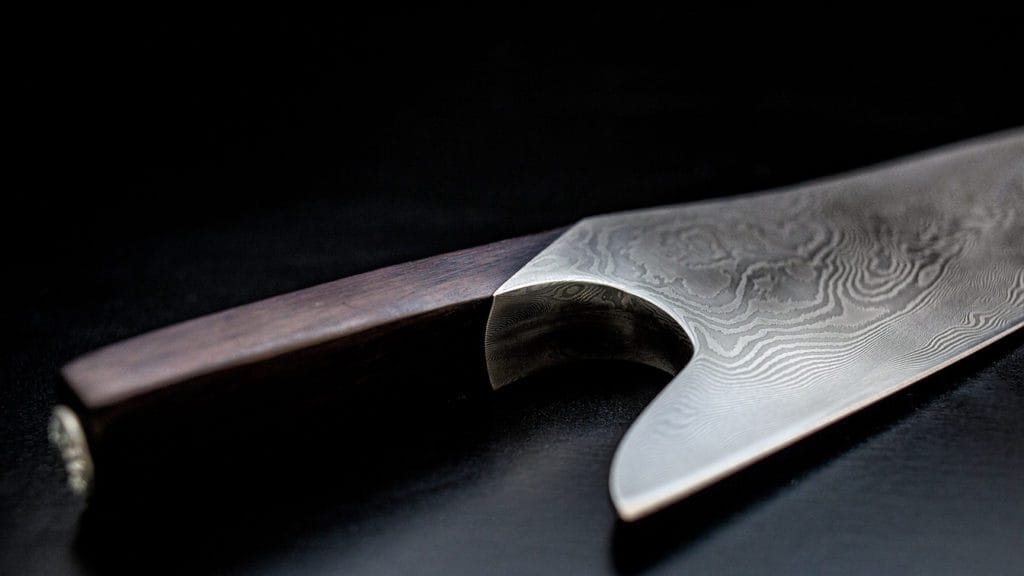
Jeder Griff ein Unikat aus robustem Mikarta – gefertigt aus gepresster Baumwolle und Harz, das mit seiner markanten Maserung und außergewöhnlichen Widerstandskraft begeistert.
Kochmesser Mikarta
188,00 €Larding knife Mikarta
96,00 €Ham knife Mikarta
149,00 €ALPHA Mikarta
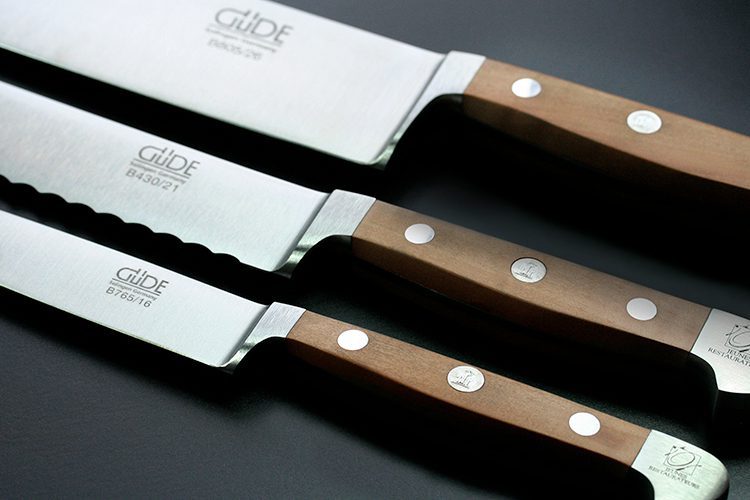
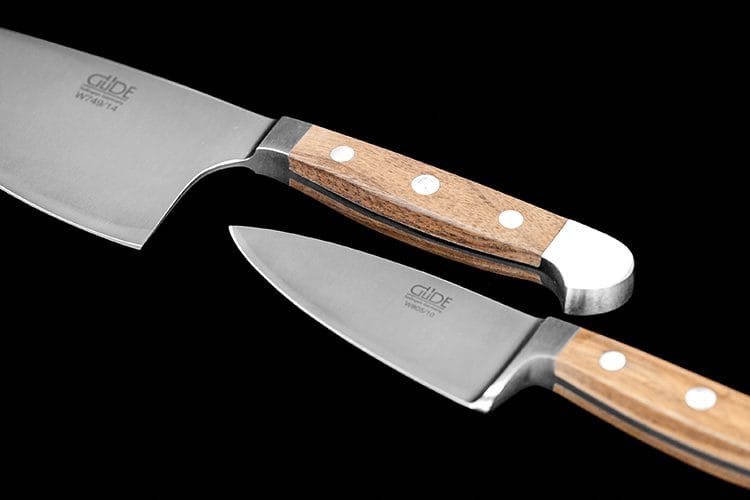
The handles of this knife series are made of a fibre-synthetic resin composite, called Mikarta . Grinding the handles results in an individual structure and pattern, so that no two knives are alike. Like all the knives in the Alpha series, the blade of the Alpha Mikarta series is made of chrome-vanadium-molybdenum knife steel and forged by hand from a single piece of steel.
More than 40 further manual operations are necessary to produce a unique piece of Solingen knifemaking art. Because of the Mikarta handles, these knives should not be put in the dishwasher. The blade is stainless, ice-hardened and of course hand-sharpened.

Material
The blade material of knives has to meet a wide range of requirements, some of which are contradictory. It is therefore important to achieve an optimum between the different requirements. A knife steel should be hard, but not too hard, otherwise it would break. But it should also not be too soft, otherwise the knife would become blunt too quickly through wear. That is why the knives in the Alpha Mikarta series from GÜDE are made of a chrome-molybdenum-vanadium knife steel that has an optimum hardness of approx. 57-58 HRc (Rockwell).
The hardness of the knife steel of the series Alpha Mikarta of 57-58 HRc is optimal for the different requirements that a good knife must fulfil.
Thanks to this hardness, the blade of the knives in the Alpha Mikarta series is torsion-resistant and thus guarantees exact guidance of the knife and thus a precise cut.
Production
Knives in the Alpha Mikarta series are drop-forged from one piece of steel. Drop forging ensures high material strength even under dynamic stresses. During drop forging, the entire forging blank is heated and deformed. In up to 55 further steps, the forged blank is turned into a unique handmade knife from the knife manufactory GÜDE.
After the knives have been roughly ground, calibrated and cleaned, the so-called ice-hardening process follows: the knives are cooled to -80 °C to improve the microstructure in the blade steel. In the next step, the knives are tempered in two stages, i.e. heated again and thus made unbreakable. The blade is then pre-ground, followed by pre-grinding of the back of the knife. This is followed by the fine grinding of the back of the knife and the sharpening of the bolster. The inside of the handle is now pre-ground. Pre-grinding of the bolsters is done in 5 steps. This is followed by the fine grinding of the blade. This is also called "pliestening". The handle scales are now adapted to the knife handle. Then the holes for the rivets are drilled. A countersink must be made in the holes for the rivet heads. The handle and the blade are now joined by rivets. The handle scales are roughly ground on the tang and bolster in about five operations. These five operations must be repeated with a finer abrasive belt. Now the back of the knife gets the finest grinding. The fine grinding of the front bolster follows and the knife handles are pre-polished. Then the central decorative rivet is mounted and the handles are finely polished. Then the knife edge, also called the bevel, is ground (stripped) and the trigger is polished. In the next step, the GÜDE logo is etched onto the blade. Then the knives are cleaned and the quality is checked. After that, the knives are put into a sheath for protection. Finally, the shipping bags are fitted with rivets and appropriate labels. The finished knives are now sent to the warehouse for shipping.
Form
In drop forging, the design language is free from the tip of the blade to the end of the handle. A design language like that of Alpha Mikarta is only possible in the drop-forging process. That is why GÜDE has remained true to this proven forging technology since its founding in 1910, now in its fourth generation. An unmistakable feature of many series from GÜDE is the so-called double bolster. A bolster is the thickening of the blade steel. The (front) bolster between the handle and the blade serves both as finger protection and balance weight. The second bolster at the end of the handle gives the knives a better balance. This guarantees the user pleasant and fatigue-free work.
The tang is the part of the steel to which the handle of a knife is attached. If the tang goes from the blade to the end of the handle, it is called a full tang. The knives in the Alpha Mikarta series from GÜDE all have a full tang, as this gives a better balance of the weight.
Since the full tang is completely visible from above and below over the entire length of the handle, it virtually proves that the knives in the Alpha Mikarta series are forged from one piece. No seam, no material transition - simply drop-forged from one piece.
Function
A good knife must be sharp, stay sharp, fit well in the hand and be balanced so that fatigue-free and safe work is guaranteed at all times.
The hardness of the GÜDE blade steel with approx. 57-58 HRc (Rockwell) and the GÜDE bevel angle of approx. 33 degrees ensure optimum sharpness and edge retention of the Alpha Mikarta series. The shape of the handle, the full tang and the double bolster typical of GÜDE guarantee perfect handling and balance of the knives in the Alpha Mikarta series.
Hinsichtlich Schärfe und Schneidhaltigkeit kommt dem Watenwinkel eine besondere Bedeutung zu: Denn Schneiden ist „physikalisch“ das Treiben eines Keils durch ein Schneidgut. Das geht umso besser, je spitzer der Winkel des Keils, also der Watenwinkel ist. Wate ist die Bezeichnung der Messermacher für die Schneide, also, den scharf geschliffenen Teil eines Messers. Ein spitzer Watenwinkel macht ein Messer schärfer als ein stumpfer Watenwinkel. Ist der Watenwinkel jedoch zu spitz, kann die Wate brechen. Daher haben die Messer der Serie Alpha Mikarta von GÜDE einen optimalen Watenwinkel von ca. 33 Grad. Dieser Winkel garantiert Schärfe und Stabilität zugleich. Der Chrom- Molybdän-Vanadium-Messerstahl der Serie Alpha Mikarta sorgt mit seiner Härte von ca. 57-58 HRc (Rockwell) dafür, dass die Schärfe lange anhält. Voraussetzung ist das Schneiden auf einer geeigneten Schneidunterlage, z.B. aus Holz oder aus Kunststoff. Die sprichwörtliche Ausgewogenheit der Messer der Serie Alpha Mikarta entsteht dank des Doppelkropfes in Verbindung mit dem Voll-Erl. So entsteht ein Gegengewicht zur Klinge im Griffbereich. Für den Anwender heißt das perfekte Balance und ermüdungsfreies Arbeiten. Dabei ist eine sichere Griffhaltung stets garantiert. Denn vorderer und hinterer Kropf umschließen die Hand und schützen so vor ungewolltem Verrutschen auch bei größerem Krafteinsatz. Die Messer der Serie Alpha Mikarta halten, was sich der Hobbykoch von einem perfekten Messer verspricht. Von Hand gefertigt, im Gesenk aus einem Stück geschmiedet, mit der Erfahrung Jahrhunderte alter Solinger Messermacherkunst.
Our knife series
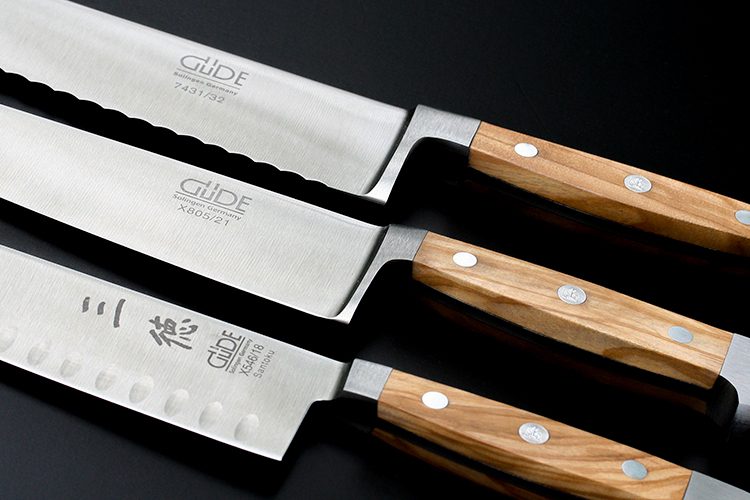
We value individuality - especially in the development and optimisation of our knife series. This is reflected in every single blade that leaves our manufactory, in the selection of particularly beautiful and tactile handle materials and a unique ergonomic design that fluently enables and celebrates fast, precise work.
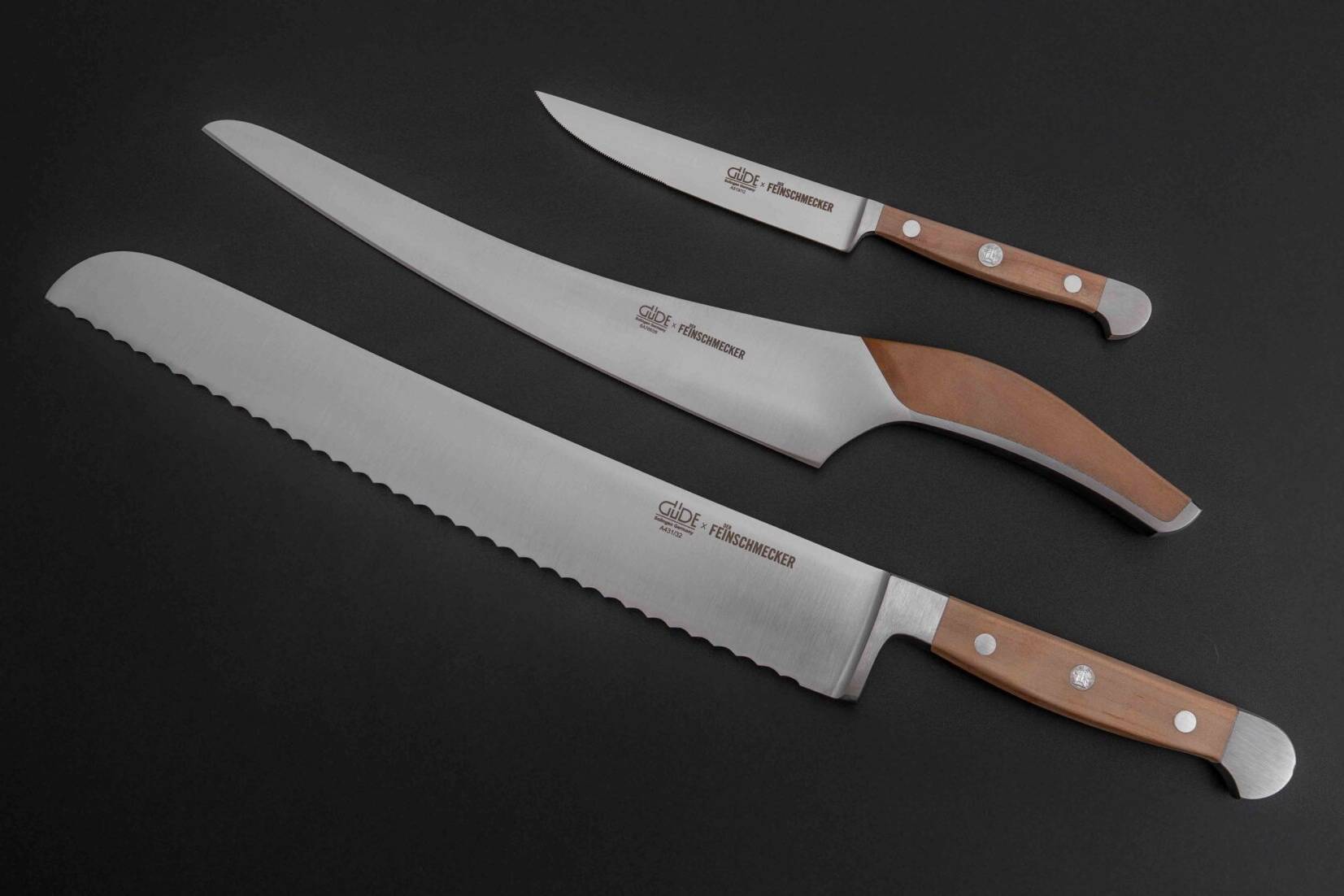
Feinschmecker x Güde
Die exklusive „Feinschmecker“-Edition vereint echte Handwerkskunst aus Solingen mit dem hohen Anspruch von Deutschlands führendem Gourmet-Magazin.
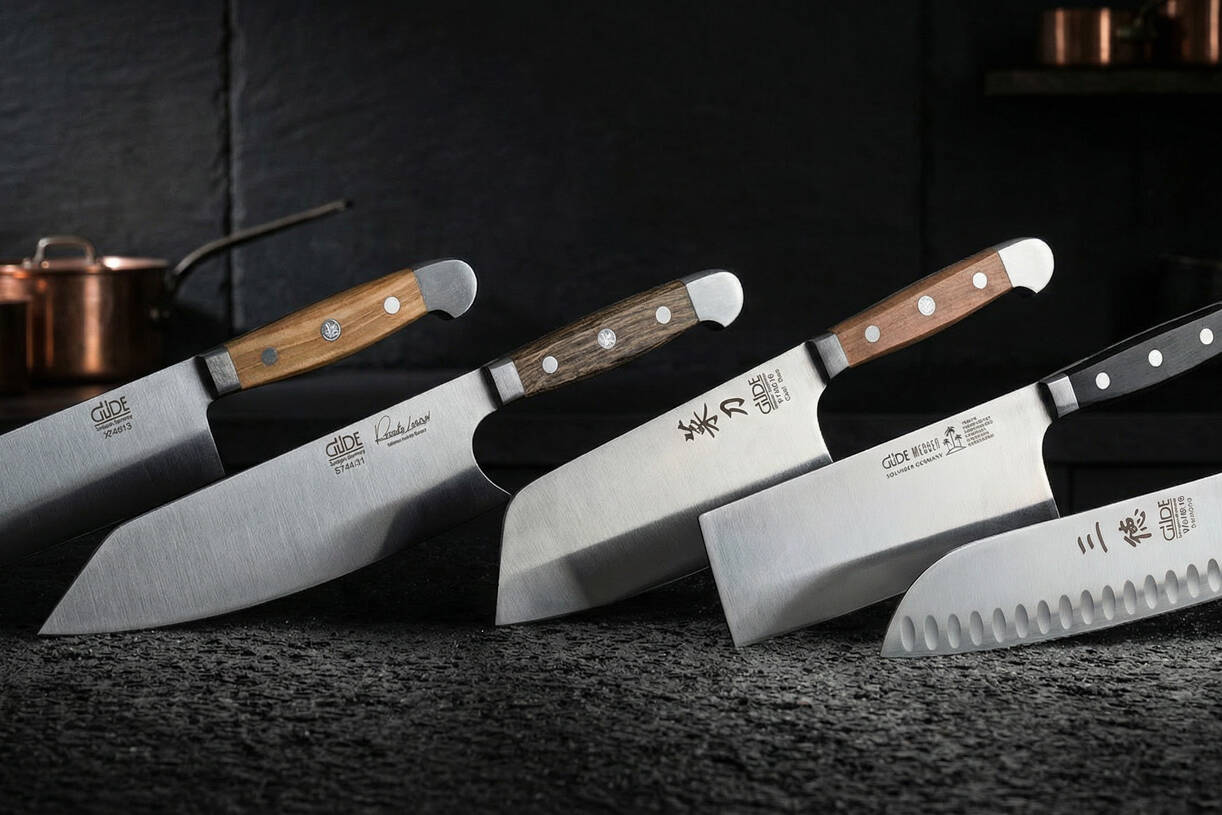
Discover knife icons
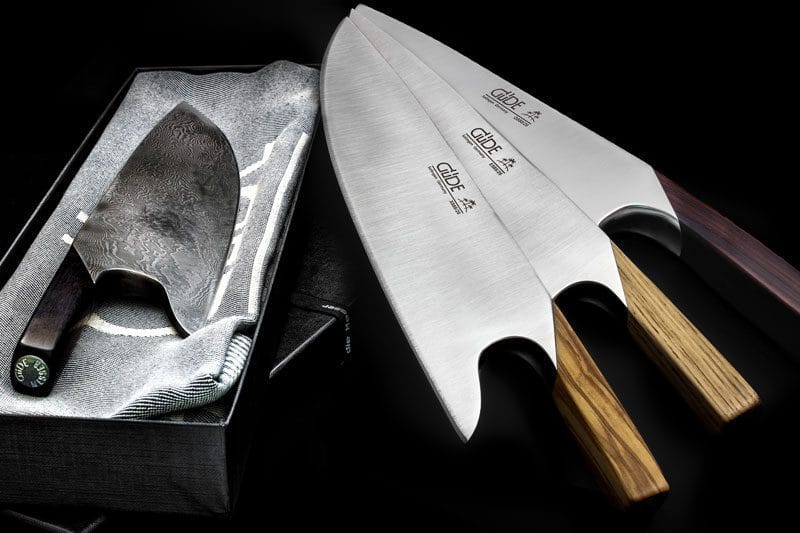
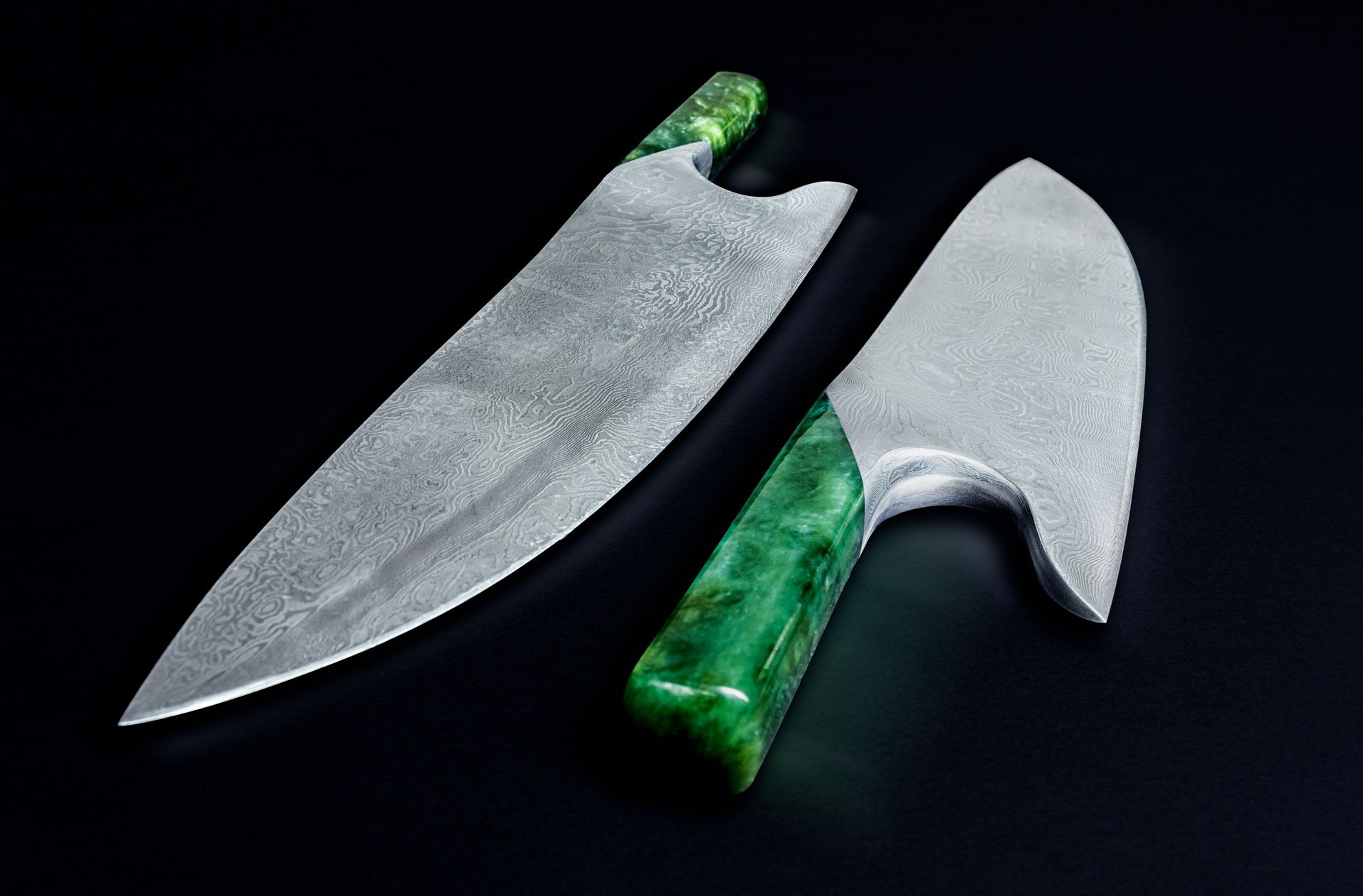
THE KNIFE.
Our THE KNIFE. lives up to its name: this all-rounder was conceived, developed and forged by us with a particular focus on perfect ergonomics. Its special shape and balance ensure an automatic over-grip of the hand, which encloses the blade when cutting and thus finds a quasi natural extension in THE KNIFE.
Güde Bread knife
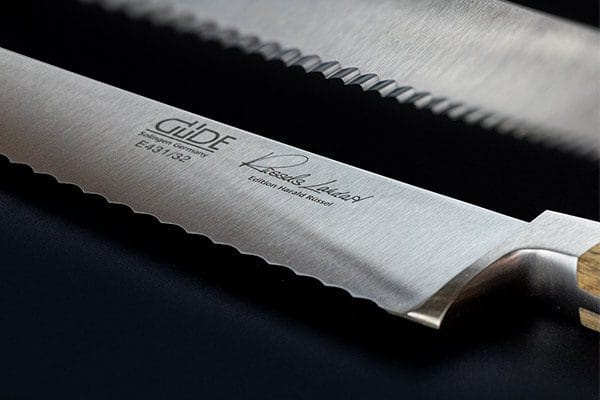
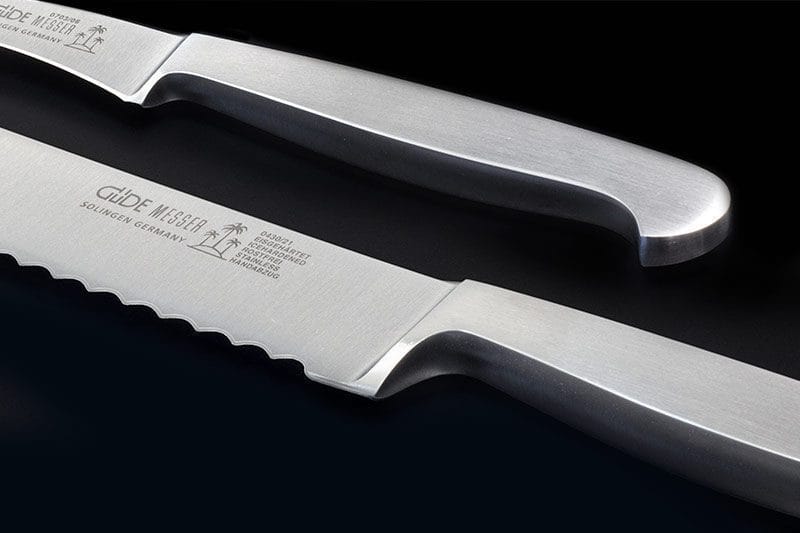
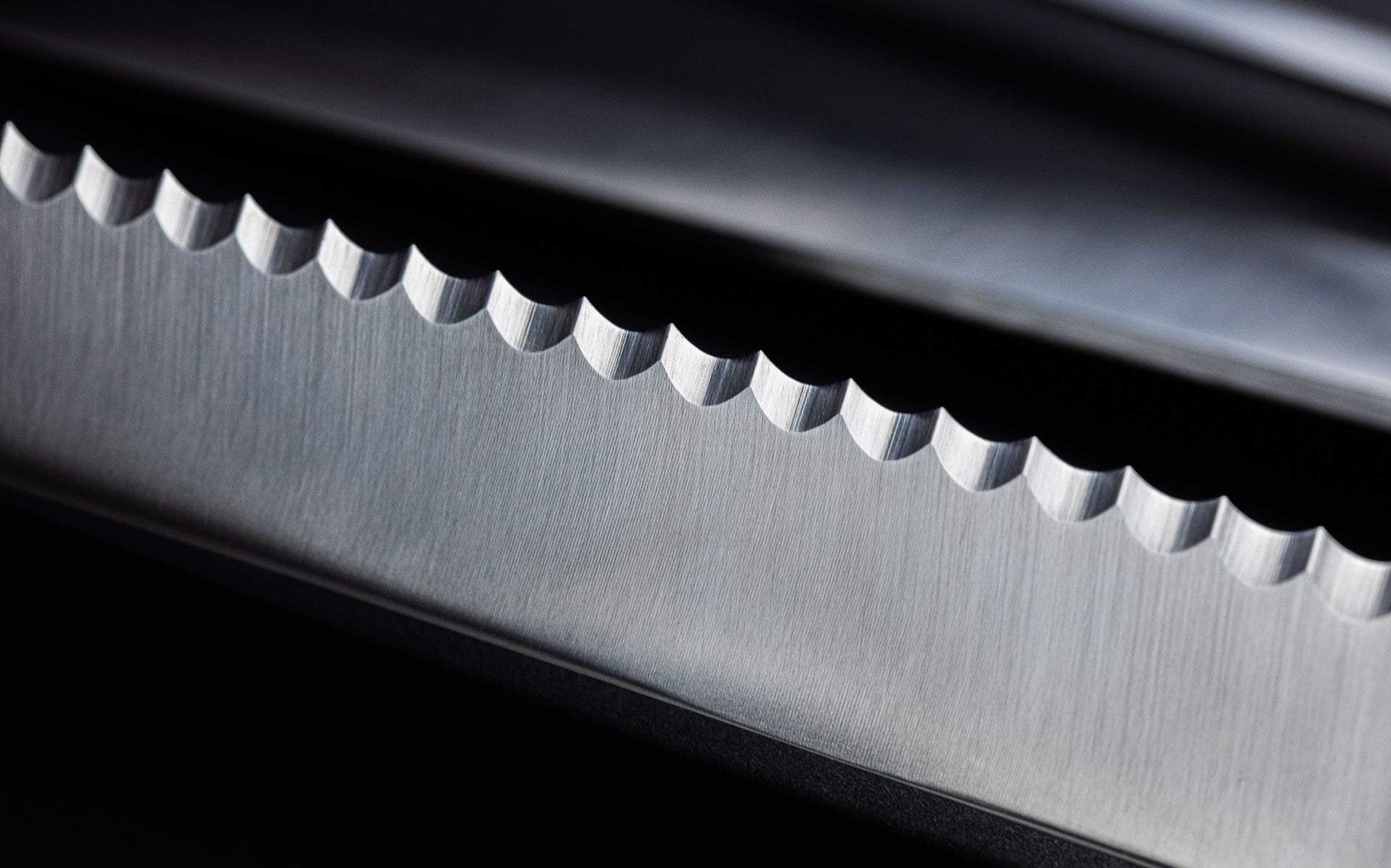
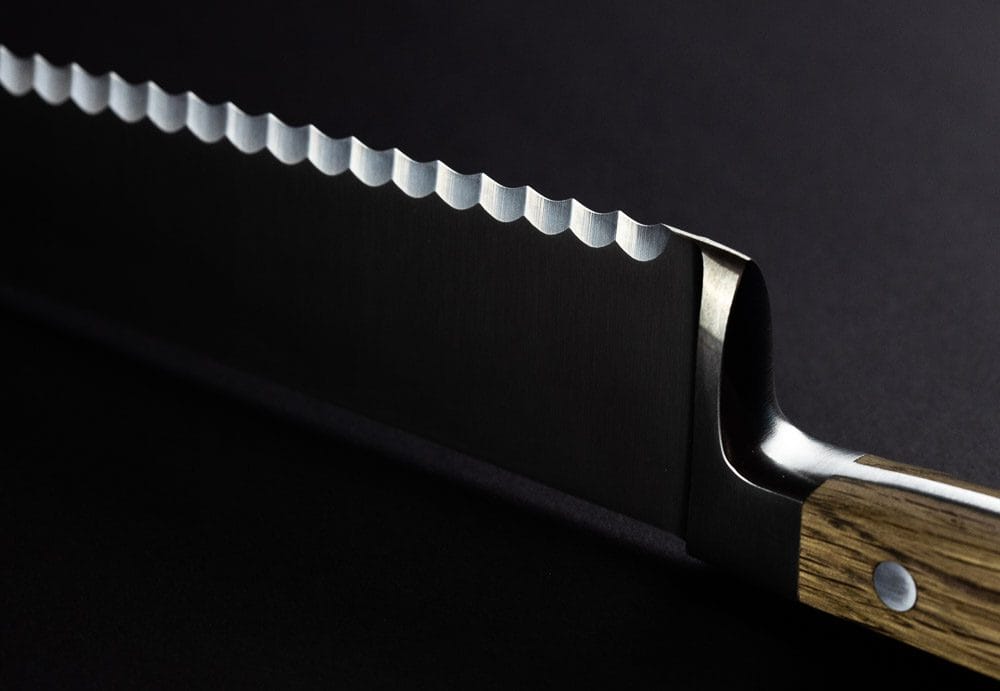
Developed in 1941 by the heir to the manufactory Franz Güde , the special "GÜDE serrated edge" of our bread knives today delights bakers and bread lovers all over the world. The pointed teeth of the unyielding, sharply ground chrome-vanadium-molybdenum steel ensure that breads, baguettes and rolls can be sliced instead of squashed, but also cabbages, melons and crispy crusted roasts can be cut more easily than ever. Unadorned, beautiful handles made of different high-quality materials do the rest for this knife legend of ours.
Utility knife
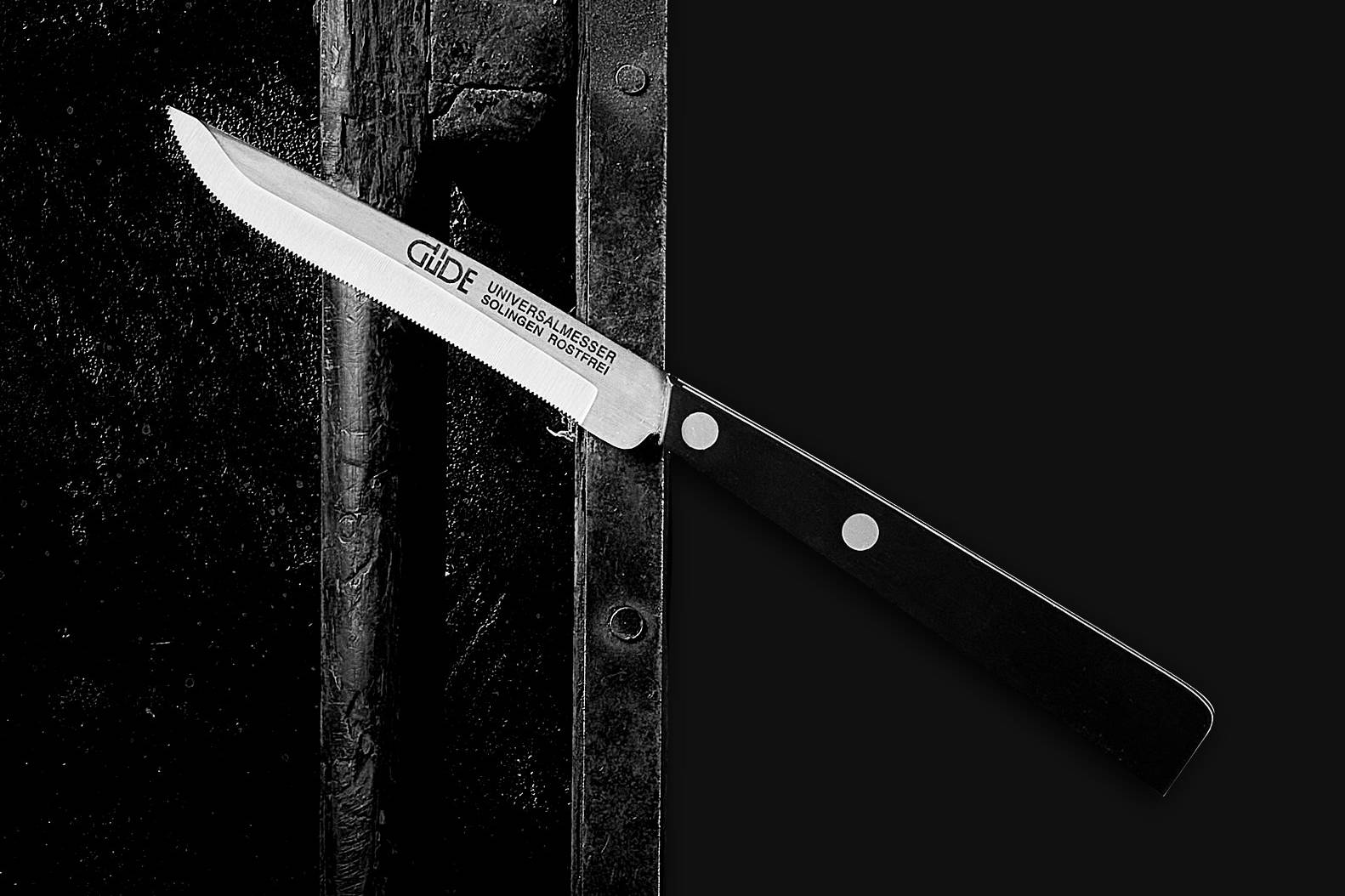
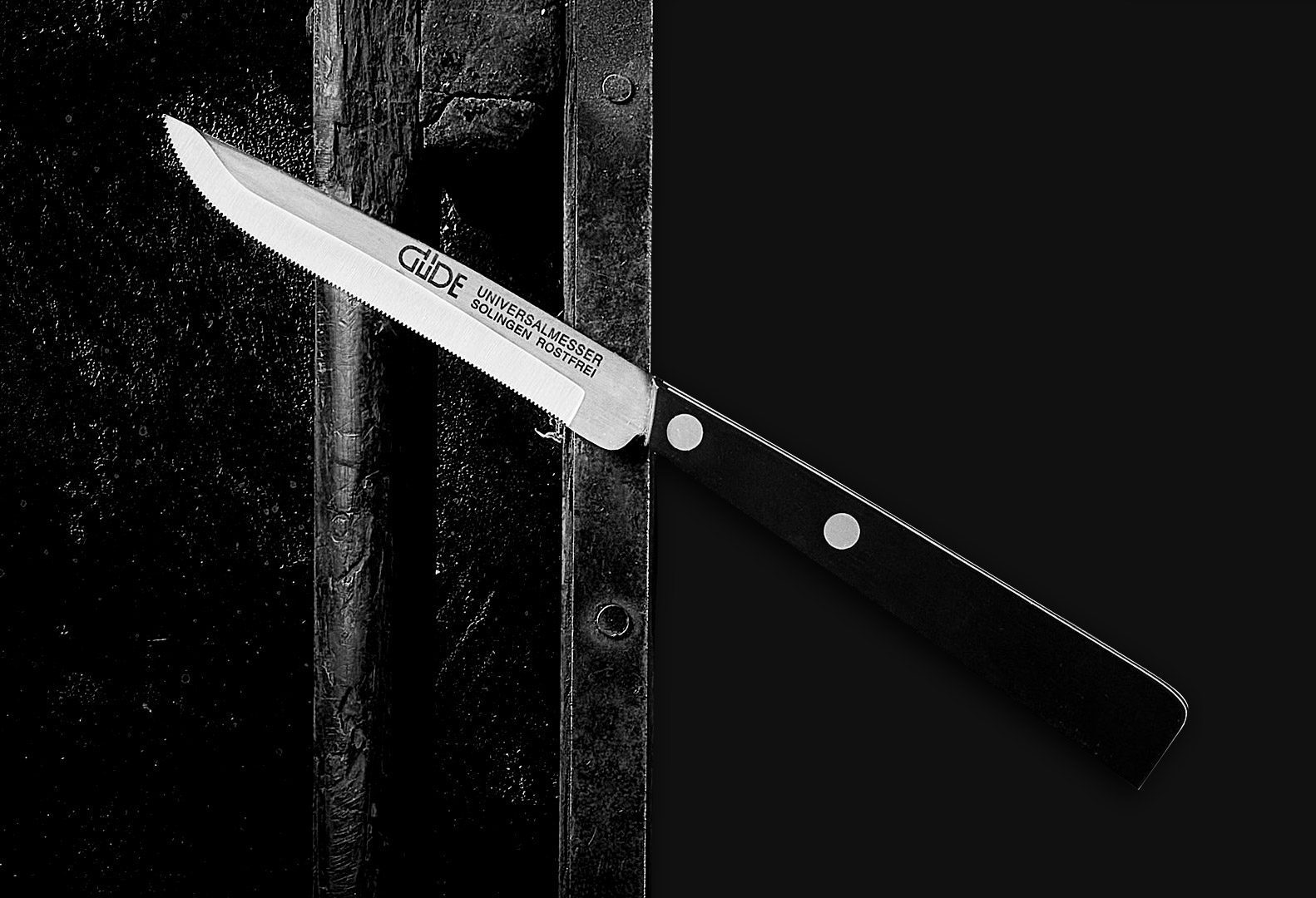
Our compact all-round talent is handy and effective - not only when it comes to precise work with smaller items. Its fine serration and double-sided hollow grinding make our universal knife the ideal companion for peeling, cutting and slicing vegetables, meat, fruit and co.