



Schälmesser von Güde – Präzision beim Schälen aus Solingen
The classic peeling knife from Güde the perfect companion for delicate peeling and detailed work in the kitchen. Hand-forged in Solingen, the curved blade effortlessly removes skins from fruit, vegetables, and potatoes—precisely, safely, and cleanly.
Other vegetable knives
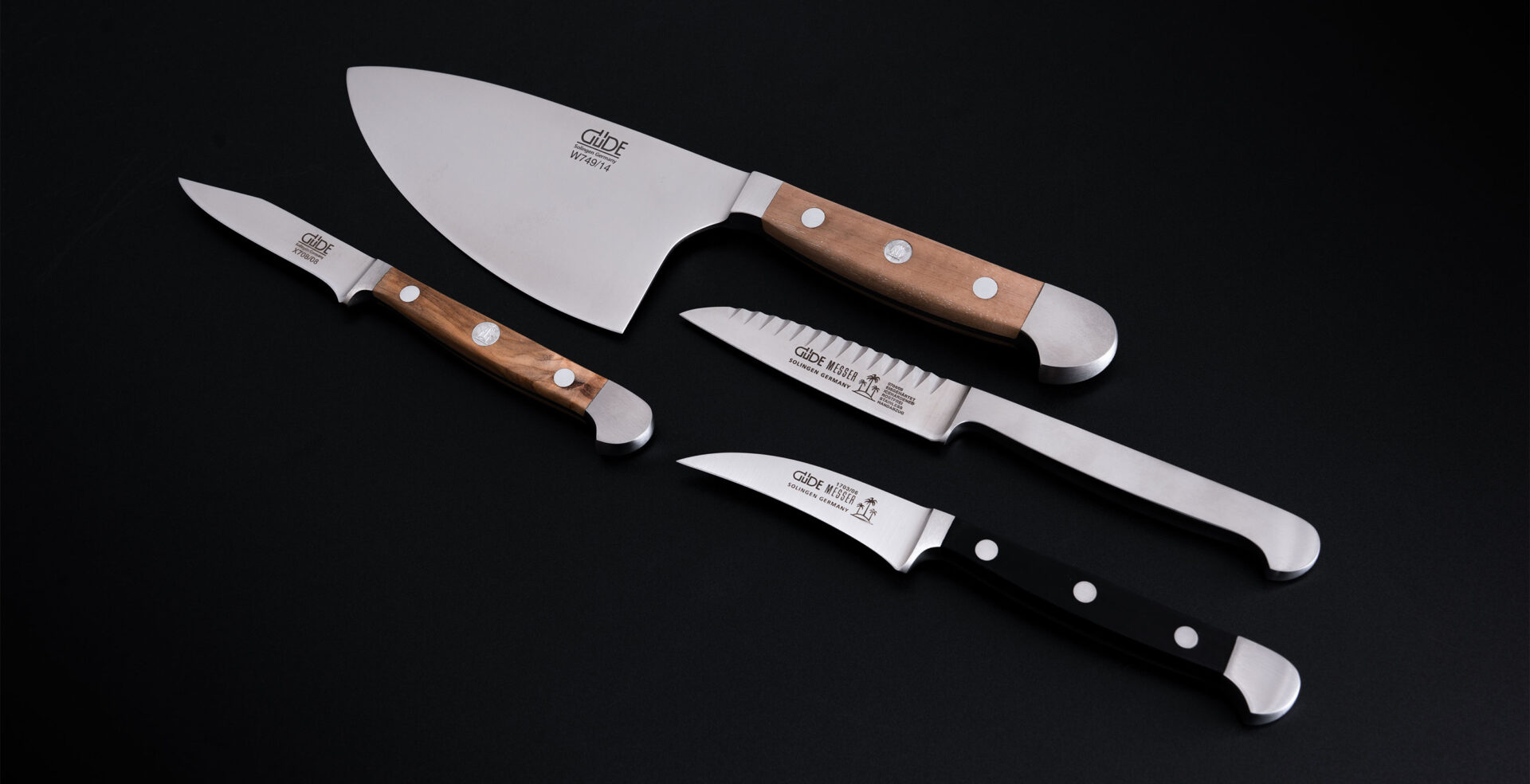
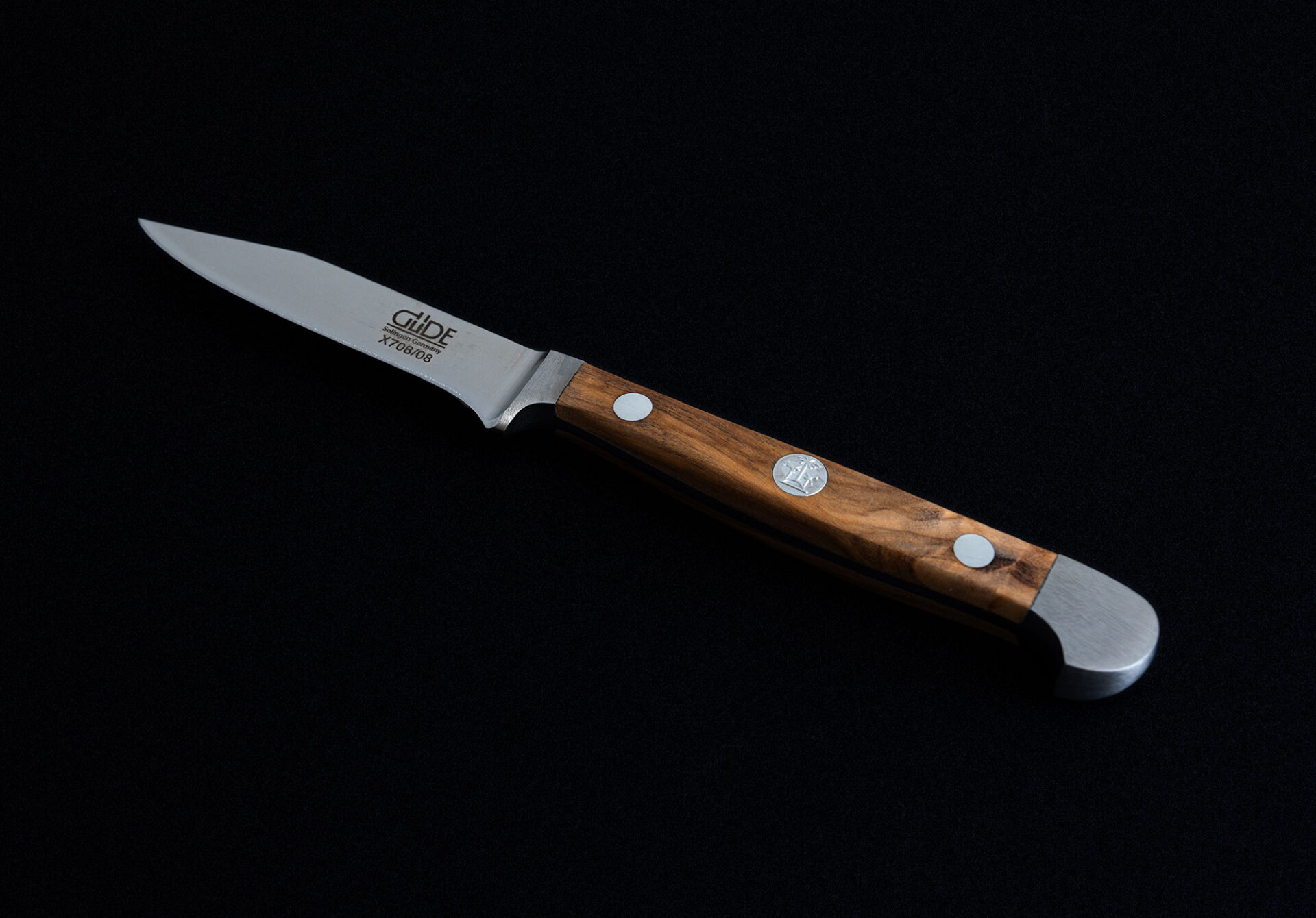
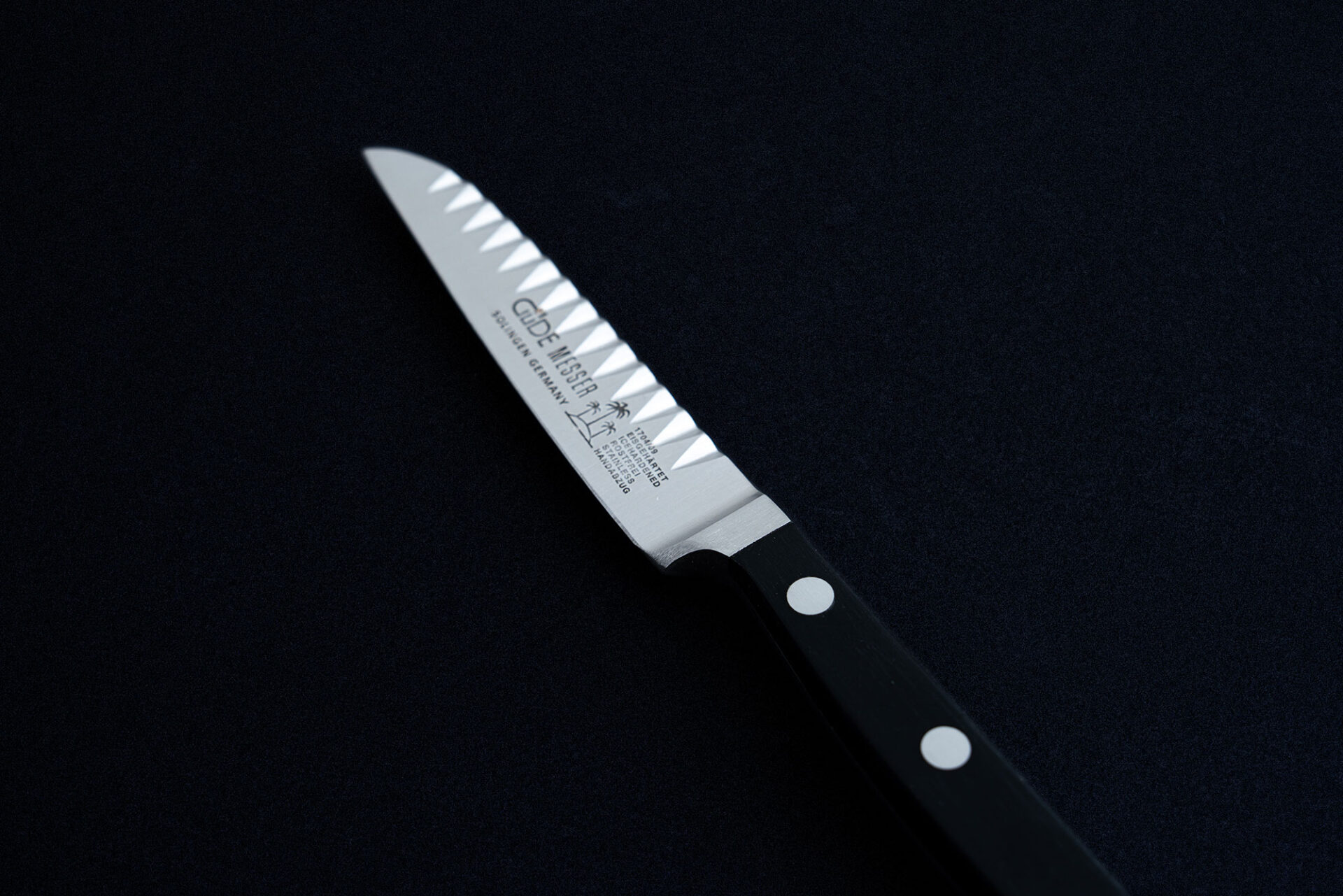
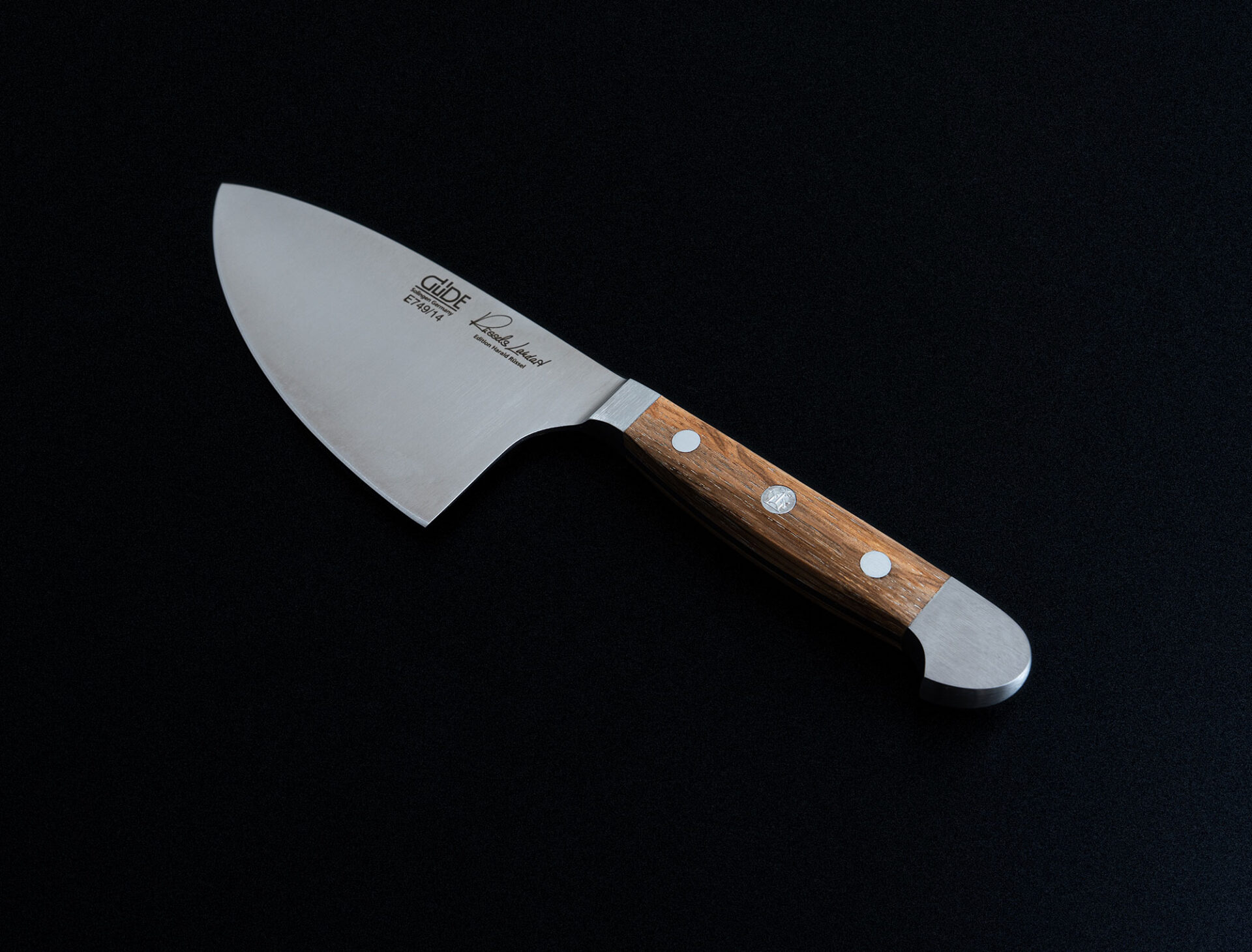

Alpha paring knife
73,00 €
Paring knife olive
90,00 €
Pear paring knife
94,00 €
Paring knife barrel oak
94,00 €
Paring knife walnut
94,00 €
Paring knife Kappa
84,00 €The ergonomic handle guarantees optimal grip and control. Güde stand for the highest quality and durability—ideal for anyone who values professional work with sharp knives.
Peeling knives from Güde precise peeling from Solingen
Alongside the chef's knife, the paring knife is part of the basic equipment in every kitchen. With a Güde from Solingen , you Solingen peel and cut fruit and vegetables quickly, with precision and minimal waste.
What is a paring knife?
A paring knife is a small, handy kitchen knife with a short blade measuring around 6 cm in length. It was developed specifically for peeling and cleaning fruit and vegetables and, unlike larger knives, is held directly in the hand without a cutting board.
Typical uses include potatoes, carrots, kohlrabi, onions, apples, pears, and other round or irregularly shaped vegetables. The peeling knife is also the tool of choice for coring, cutting out imperfections, and decorative cuts.
Peeling knife or paring knife – what's the difference?
In common parlance, a distinction is often made between paring knives with straight blades and carving knives with curved blades:
Classic paring knife
Straight or slightly curved blade. Versatile for peeling, cutting, and small prep work on the cutting board.
tournier knife
Short, beak-like curved blade (bird beak shape). Ideal for round shapes, economical peeling by hand, and classic turning.
What makes Güde special?
Güde knives in Solingen now in its fourth generation and with over 100 years of experience in steel processing. The blades are traditionally forged from a single piece of steel using a die.
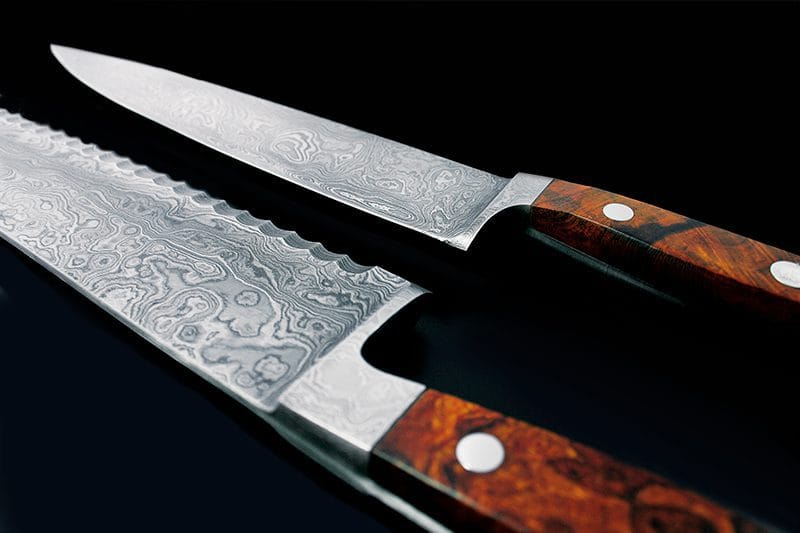
Unlike stamped knives, the forging technique offers high stability without weak points between the blade and the tang. The blade material – stainless chrome-vanadium-molybdenum steel (X50CrMoV15), typical "Solingen knife steel" – is ice-hardened and achieves a hardness of 57–58 HRC. This means high cutting durability combined with good resharpening properties.
More about blade shape and workmanship
The curved blade of all Güde is approximately 6 cm long, with a total length of around 17 cm. The double-sided grind and metal bolsters ensure optimal balance, allowing the knife to sit securely in the hand. The precise hand-grinding ensures very clean cuts—a difference you will notice the first time you peel something.
Which Güde is right for me?
Since all Güde have the same proven blade shape and length (6 cm, curved), they differ mainly in the handle material. The choice is therefore a question of application, care, and personal taste:
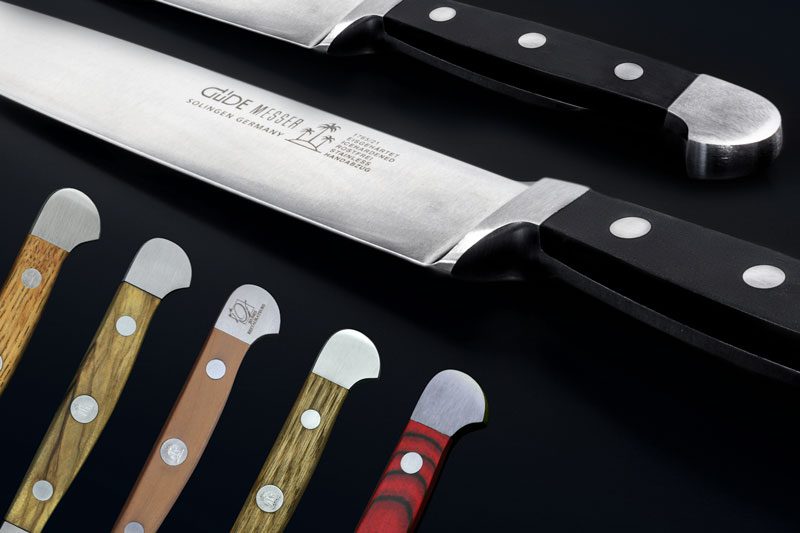
The Alpha paring knife with a sturdy POM plastic handle is triple-riveted, dishwasher-safe, and proven in commercial use.
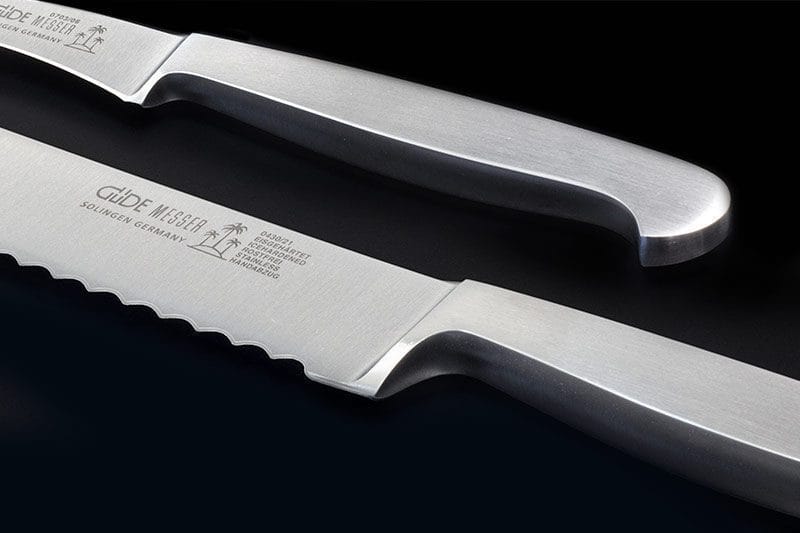
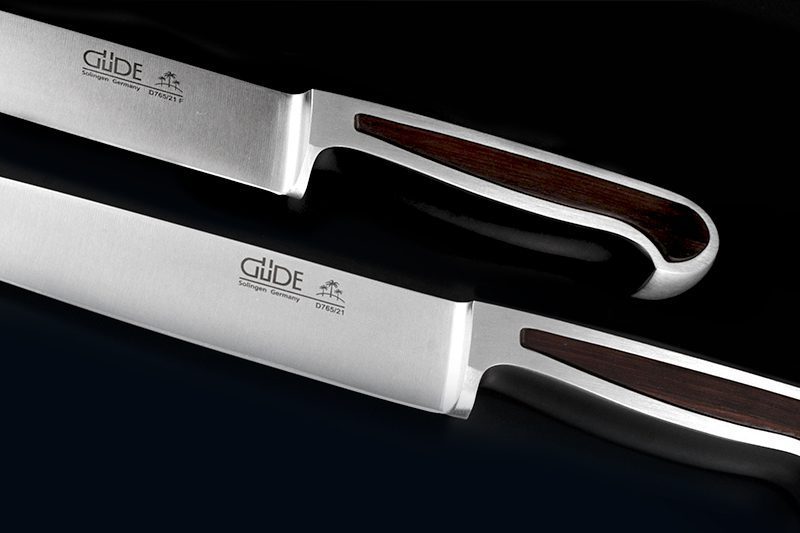
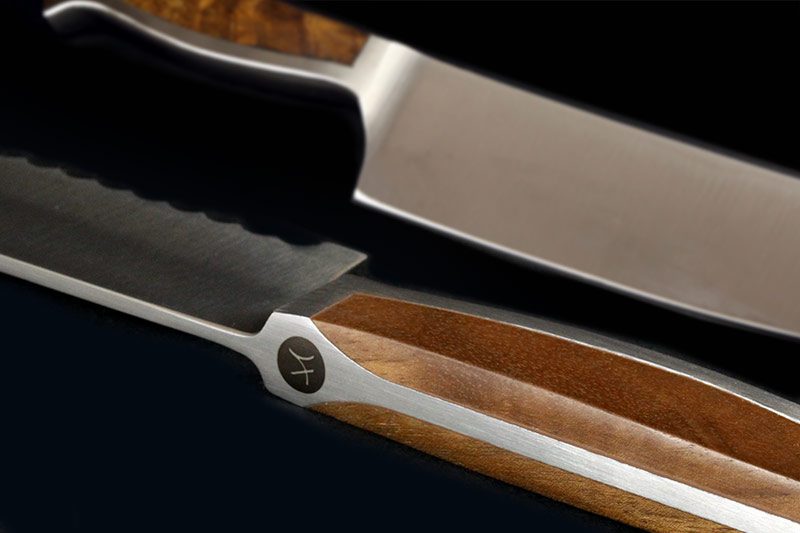
The Kappa paring knife is made from a single piece of stainless steel—there is no transition between the blade and the handle. The distinctive double bolster serves as a finger guard and ensures perfect balance. Rustproof, scratch-resistant, and dishwasher-safe.
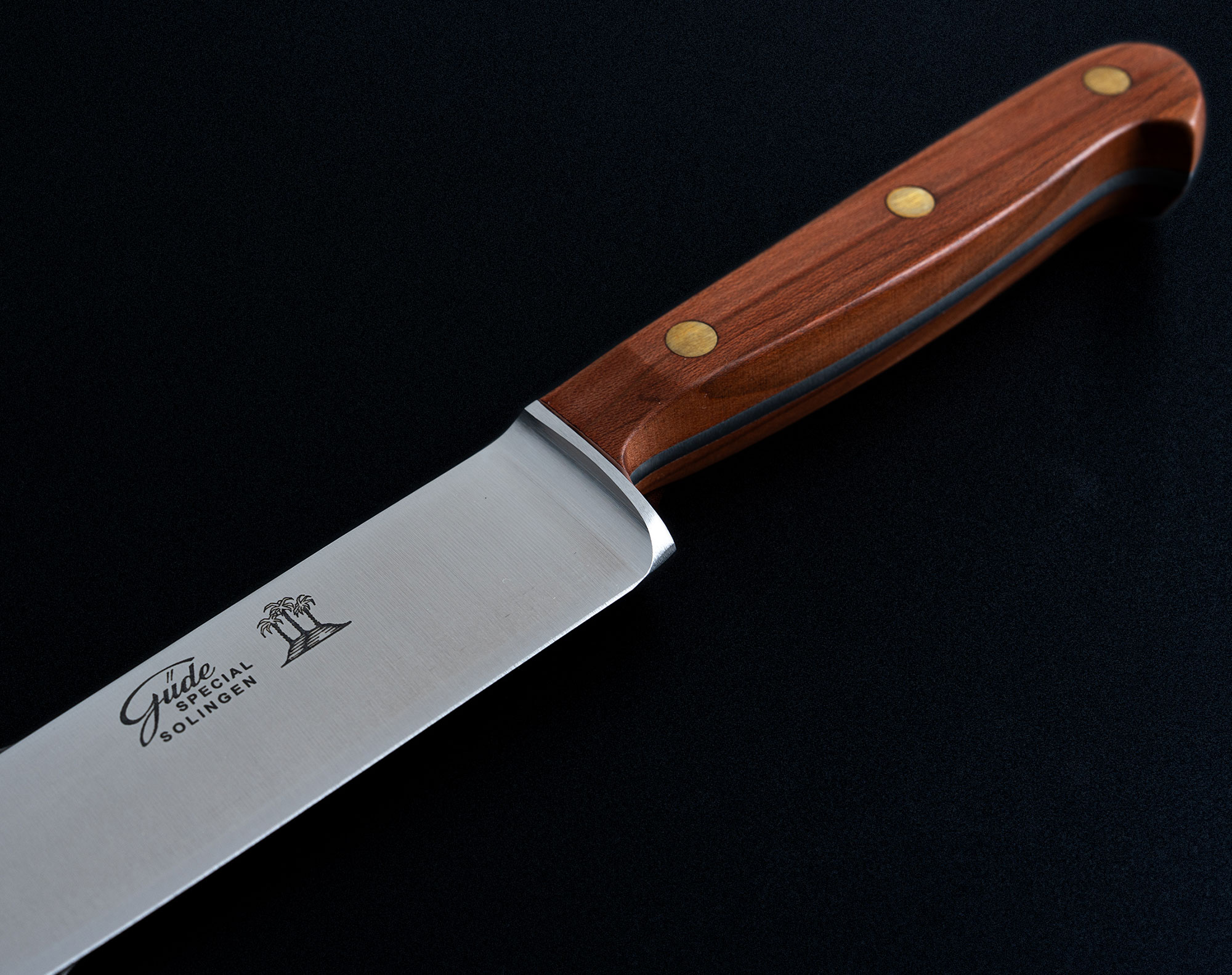
Wooden handles offer a warm, natural feel with individual grain patterns—making each knife unique:
More about the handle materials
Alpha POM plastic) – The black plastic handle is triple riveted, extremely robust, and dishwasher safe. The choice for anyone looking for an easy-care utility knife.
Kappa all metal) – Made from a single piece of stainless steel, no material transition. The double bolster provides finger protection and perfect balance. Rustproof, scratch-resistant, and dishwasher-safe – a design piece for purists.
Alpha – Handles made from 100–500-year-old olive wood, triple riveted. Very hard, strongly grained, each piece is unique. Not dishwasher safe.
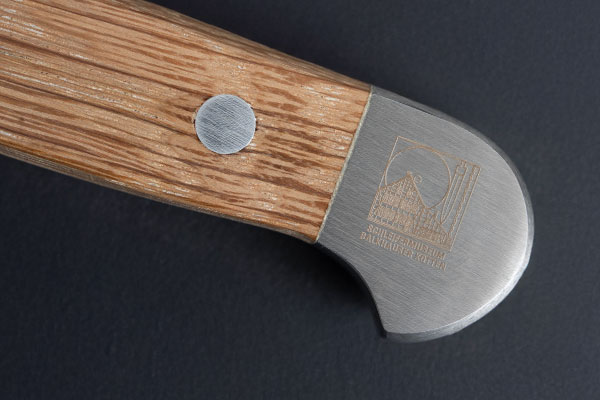
Alpha – Handle made from old oak barrel staves with distinctive grain and history. Also hand wash only.
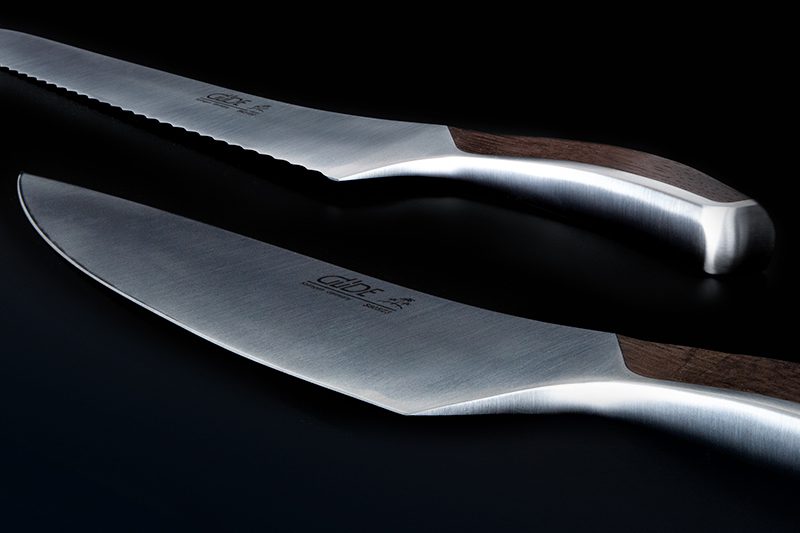
Walnut & Pear – Other high-quality hardwoods with an elegant appearance and pleasant feel.
How to properly care for and sharpen your paring knife
A high-quality paring knife deserves proper care. After use, clean it briefly by hand, dry it, and do not store it loose in a drawer—a knife block or magnetic strip will protect the blade.
Fine whetstones (grit 3000+) or ceramic sharpening rods are suitable for re-sharpening. The steel with 57–58 HRC can be re-sharpened easily and retains its sharpness for a long time. For very blunt blades, thorough basic sharpening is recommended – or the Güde .
Frequently asked questions about peeling knives
Why do I need a separate paring knife?
With its short, handy blade, a paring knife allows for much more precise and economical peeling than a large chef's knife. This preserves more of the valuable flesh of the fruit and makes working safer and more controlled.
What is the difference between a paring knife and a vegetable knife?
A paring knife often has a longer, straight blade and is designed more for cutting tasks on a cutting board. The peeling knife, with its curved blade, is guided directly in the hand. For many chefs, both knives complement each other perfectly.
Are Güde also suitable for professionals?
Yes. With forged blades made from high-quality Solingen knife steel, hardness grades of 57–58 HRC, and carefully crafted handles, Güde are used in professional kitchens as well as by ambitious amateur chefs. The Alpha its robust POM handle and the Kappa an all-metal design are particularly well suited for everyday use in the catering industry.
Which paring knife do chefs recommend in tests?
Forged knives from Solingen perform well in paring knife tests. The decisive factors are blade hardness, cutting performance, and a balanced ratio between blade and handle. Güde meet these criteria thanks to their traditional forging process and ice-hardened blades.
Can I put my Güde in the dishwasher?
The Alpha paring knife with POM plastic handle and the Kappa paring knife in an all-metal design are dishwasher safe. However, for maximum durability, we recommend washing by hand. Wooden handles should never be placed in the dishwasher, as the wood can swell and crack.
What other knives complement the paring knife?
In addition to the paring knife, practical additions for vegetable preparation include the classic vegetable knife for working on the cutting board, the Shark herb knife for chopping herbs, and the decorative knife for decorative wavy cuts.